

18th Century Cappadocia Rug Fragment
Period: 18th Century
Origin: Cappadocia, Turkey
Dimensions: 113 x 171 cm
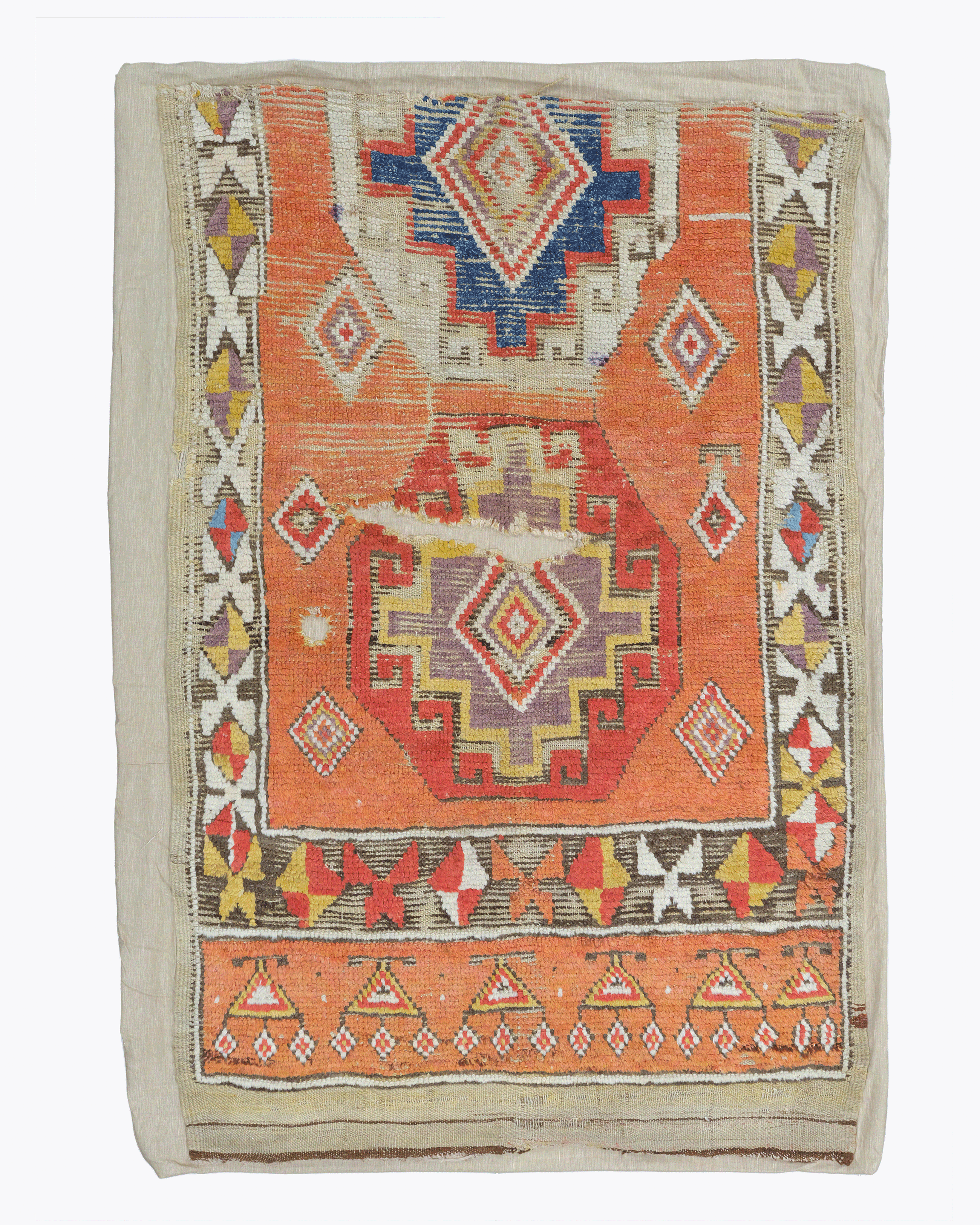
The surface data of this extraordinarily rare Cappadocia rug fragment provides definitive evidence of the early Anatolian weaving traditions that predate the Seljuk influence, offering a glimpse into the ancient textile heritage of Central Turkey. A detailed visual analysis of the composition reveals a powerful, archaic geometric design featuring a stepped, multi-layered central medallion and a distinctive “arch” or prayer niche element at the top. This structural balance between the vibrant orange field and the primitive, high-contrast geometric motifs reflects a symbolic language and technical simplicity found only in the most significant early medieval Anatolian archetypes.
The color palette is masterfully balanced, featuring an intense, archaic orange-red ground that serves as a dramatic canvas for the bold pops of indigo blue, ivory, and soft purple-brown. These saturated tones, achieved through the expert application of natural dyes over a millennium ago, exhibit a chromatic resilience and raw luminosity that have remained remarkably potent. The inclusion of a wide ivory border decorated with rhythmic, polychrome triangles and diamond shapes creates a powerful visual frame, a hallmark of the sophisticated early color theory practiced in the Cappadocia region during the Byzantine era.
Structural data indicates the use of primitive, hand-spun local wool with a characteristically coarse and uneven texture, which has developed a weathered, historic patina over centuries. These organic variations and the visible structural loss—including the significant central tear—definitively distinguish this antique masterpiece from any modern or archaeological reconstruction. The presence of authentic disintegration and the extreme softening of the wool fibers serve as physical verification of its 8th-century origin and its status as a critical cultural and historical artifact of human weaving history.
Ultimately, this Cappadocia rug fragment stands as a premier example of Early Anatolian textile art, representing a peak in both technical survival and aesthetic power. Its technical integrity, archaic geometric composition, and historical significance make it a priceless cultural treasure for global museums and scholars. The haunting presence and historical weight of this piece make it a breathtaking centerpiece that preserves the legacy of the earliest Turkish weavers for future generations.
Related products


Antique Cappadocia Rug
Early 18th Century West Anatolian Rug

Antique Milas Rug




 Mimar Mehmetağa Cad. No:10 Sultanahmet / ISTANBUL