

| Stock No |
5606 |
|---|---|
| Size |
Antique Karadashli Chuval
Period: Early 19th Century
Origin: Karadashli, Turkmenistan
Dimensions: 78 x 110 cm
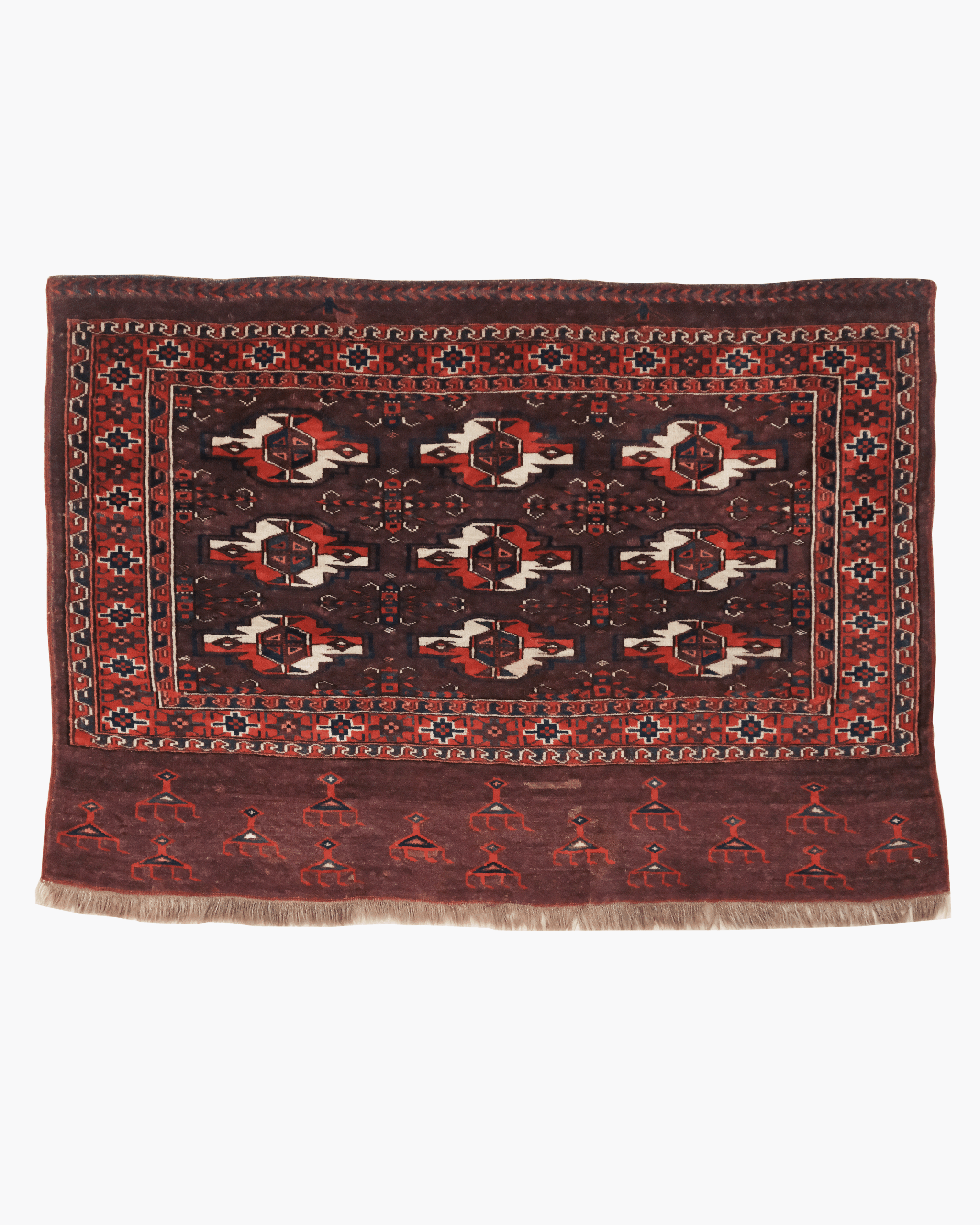
This early 19th century Karadashli Turkmen chuval is a powerful example of the nomadic weaving traditions of the Karadashli tribe, who were part of the broader Turkmen confederacy. A chuval is a large storage bag used by nomadic families to transport household goods on camels, and the decorative faces of these bags are highly prized for their robust construction and deep tribal symbolism.
The composition is centered around a series of nine primary Chuval Gul medallions, arranged in a structured three by three grid against a somber, dark mahogany or chocolate brown field. Each gul is rendered with the characteristic Karadashli angularity, featuring a multi layered interior with ivory, madder red, and deep indigo accents. Between the primary medallions are smaller secondary cruciform motifs that maintain a sense of rhythmic balance across the field.
The color palette is classic and masterfully muted, utilizing high quality natural dyes to produce deep mahogany browns, saturated madder reds, and cool indigo blues. The highlights of ivory provide a sharp graphic contrast, emphasizing the clarity of the tribal geometry. The high quality, hand spun wool used in Karadashli production gives these colors a deep luminosity and a sturdy, resilient texture intended for the rigors of nomadic life.
The design is framed by multiple structured borders, with the primary border featuring a repetitive sequence of stylized polychrome rosettes and geometric devices. At the bottom, the elem or skirt of the chuval displays a series of stylized, archaic tree or plant like motifs, which provide a distinct grounding to the overall composition. Overall, this 19th century Karadashli Turkmen chuval is a masterpiece of tribal artistry, representing a rare and authentic artifact of Central Asian nomadic heritage.
Stock No : 5606
Additional information
Related products

Antique Tentband Fragment

Antique Tekke Main Carpet
17th Century Ningxia Rug Fragment

Antique Tekke Ensi

Antique Beshir Engsi





 Mimar Mehmetağa Cad. No:10 Sultanahmet / ISTANBUL