

| Stock No |
2226 |
|---|---|
| Size |

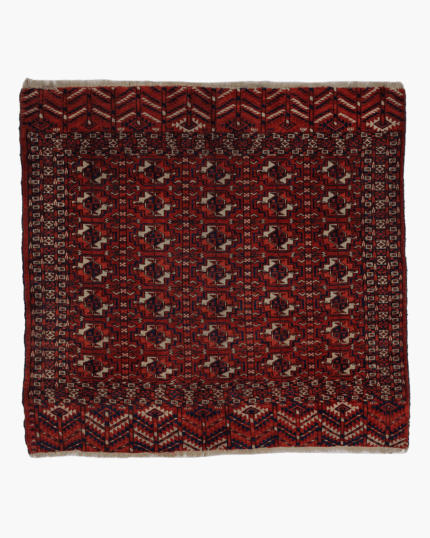
Antique Yomud Chuval
Period: 19th Century
Origin: Turkmenistan
Size : 75 x 115 cm
This strong Turkmen rug, dating to the 19th century, is a classic example of the nomadic weaving traditions of Central Asia. Turkmen rugs are highly regarded for their rigorous geometric order, a palette dominated by varied shades of madder red, and the use of the “gul” (tribal emblem) as a central motif.
The design is organized around a series of primary guls—octagonal tribal emblems—arranged in a precise, repeating grid. These guls are characteristic of a specific tribe (likely Tekke or Yomut) and serve as symbolic markers of identity and heritage. Between the primary guls, smaller secondary geometric ornaments fill the field, creating a sense of rhythmic continuity. The deep, oxblood red field provides a powerful background that emphasizes the graphic clarity of the ivory and indigo highlights within the medallions.
The color palette is rich and somber, featuring deep madder reds, dark indigo, and touches of fildişi (ivory), all traditionally achieved through the master use of natural dyes. The saturated red tones are a hallmark of 19th century Turkmen production, reflecting the high quality of local wool and the sophistication of their dyeing techniques.
The composition is framed by multiple geometric borders, including a primary border with stylized, interlocking devices. Notably, the rug features wide elem (skirt) panels at the ends, decorated with additional rows of protective tribal symbols. These borders provide a strong architectural frame that balances the intense repetition of the central field.
Overall, this 19th century Turkmen rug is a masterpiece of nomadic artistry. Its powerful geometric language, vibrant natural reds, and authentic tribal spirit make it a highly collectible work, well suited to adding a sense of history and warmth to both traditional and contemporary interiors.
Stock No : 2226
Additional information
Related products

Antique Yomud Dyrnak Gul Main Carpet
17th Century Ningxia Rug Fragment
Antique Tekke Main Rug

Antique Yomud Main Carpet


Antique Tekke Main Carpet

Antique Tekke Ensi




 Mimar Mehmetağa Cad. No:10 Sultanahmet / ISTANBUL