

Antique Urgup Runner
Period: Mid 19th Century
Origin: Urgup
Dimensions: 128 x 372 cm
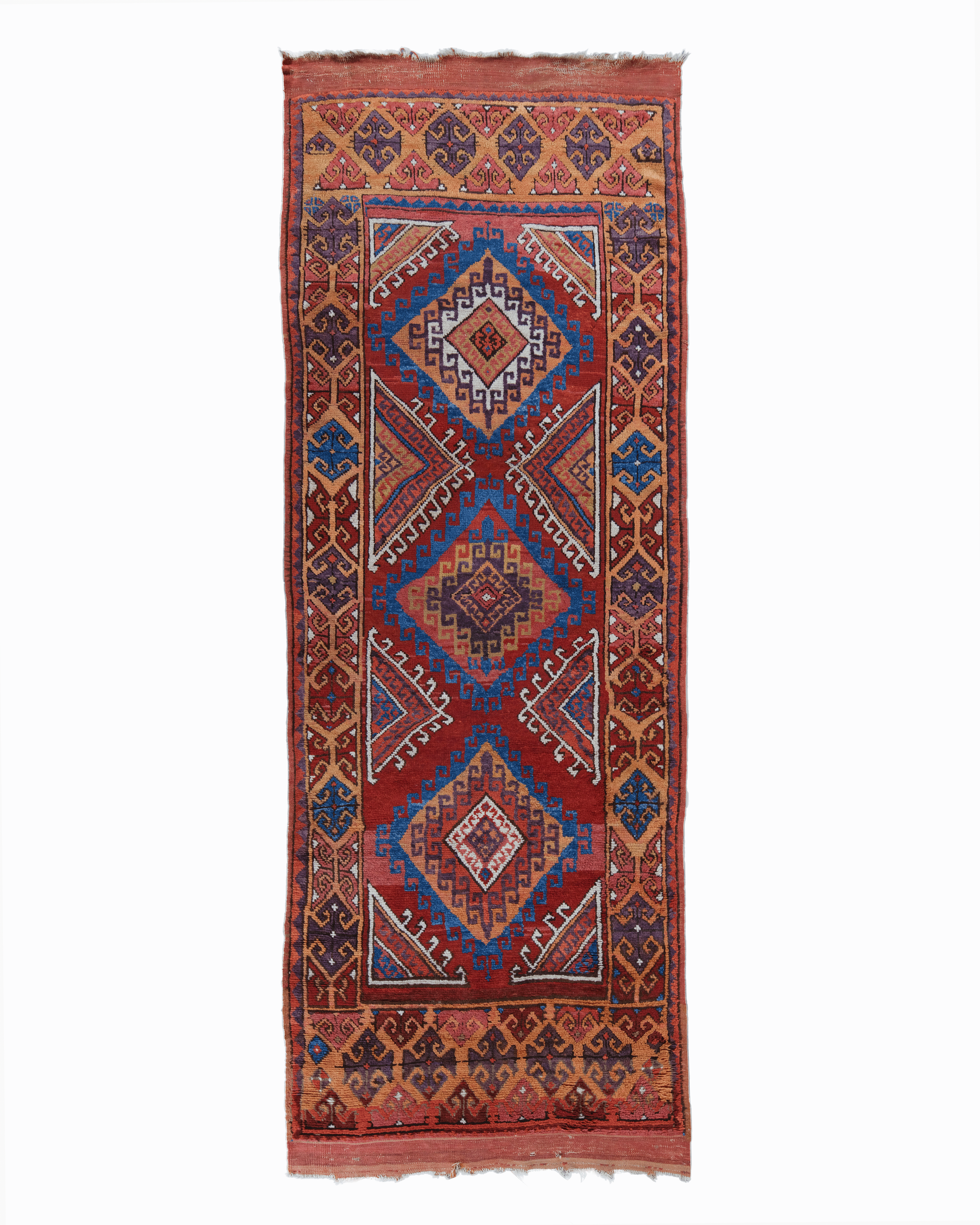
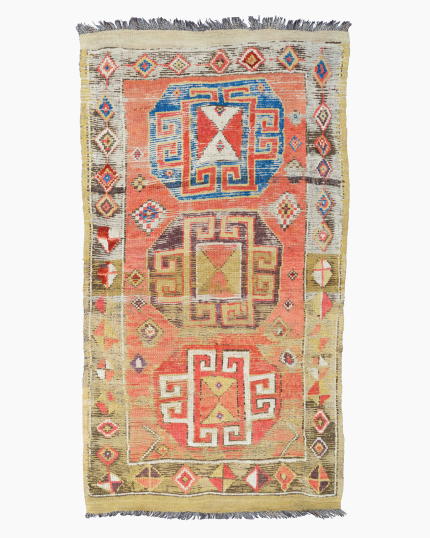
This rare middle of the 19th century Anatolian Urgup runner highlights a powerful and rhythmic geometric composition featuring a vertical sequence of three monumental, multi-layered diamond medallions anchored within a vibrant madder red field. This structural balance between the large-scale central medallions and the secondary triangular “wing” motifs reflects the pinnacle of the Central Anatolian weaving tradition. Urgup runners of this antiquity are world renowned for their bold graphic energy and archaic tribal symbolism, where the core diamond elements often serve as protective talismans for the home.
The color palette is masterfully balanced featuring a primary madder red ground that serves as a dramatic canvas for high contrast shifts of sapphire blue, golden ochre, and ivory. These rich and enduring tones achieved through the expert application of natural dyes over 170 years ago exhibit a chromatic strength and a saturated depth that are hallmarks of the finest mid 19th century Turkish productions. The inclusion of a wide, multi-layered border system anchored by a rhythmic sequence of geometric “hook” motifs creates a precise visual frame that highlights the superior wool quality and distinctive technical finesse of the Central Anatolian weavers.
Structural analysis indicates the use of premium hand-spun local wool with a characteristically lustrous pile and a supple yet resilient handle. The exceptional clarity of the angular outlines—specifically the intricate internal serrated edges of the medallions and the precise geometric guard borders—and the presence of significant harmonious abrash within the red and blue sections definitively distinguish this antique masterpiece from later commercial examples. Ultimately this Urgup runner stands as a premier example of Anatolian tribal art representing a peak in both technical endurance and graphic majesty for global textile collectors.
Three large, nested hooked diamonds aligned on the central axis of the red field are flanked by halved and similarly nested hooked diamonds of a different type. Quartered diamonds in the corners complete the field design, meaning that it is not conceived as an infinite repeat. The wide orange-ground border contains large elibelinde motifs. The rug was woven in the small town of Ürgüp. Another example of the group has been published by Brüggemann/Böhmer. – Well preserved except for minor repiled areas, original finishes all around.
Lit.: BRÜGGEMANN, WERNER & BÖHMER, HARALD, Teppiche der Bauern und Nomaden in Anatolien. Hanover 1980, no. 5
Related products
Antique Ghordes Prayer Rug
Antique Konya Rug

18th Century Aksaray Prayer Rug
Antique Cappadocia Rug





 Mimar Mehmetağa Cad. No:10 Sultanahmet / ISTANBUL