

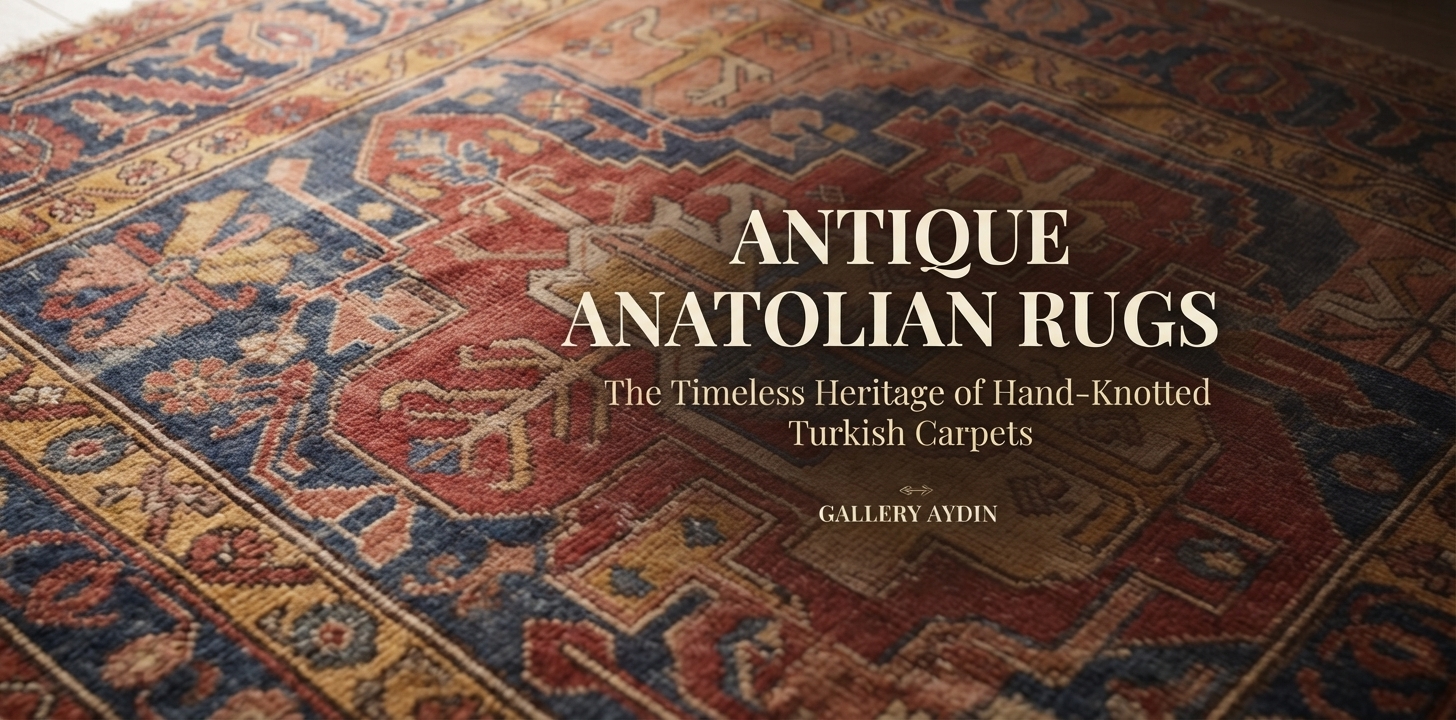
Antique Anatolian Rugs: The Timeless Heritage of Hand-Knotted Turkish Carpets
For centuries, antique Anatolian rugs have captivated art historians, interior designers, and discerning collectors across the globe. Woven across the diverse landscapes of Asia Minor—modern-day Turkey—these extraordinary textiles represent far more than simple floor coverings. Each hand-knotted piece is a woven narrative, carrying centuries of nomadic heritage, symbolic geometry, and unparalleled craftsmanship.
At Gallery Aydın, we curate rare, authentic hand-knotted Anatolian carpets that embody this rich cultural legacy. Whether you are a seasoned collector or searching for a statement heirloom for a contemporary space, understanding the history and artistry behind antique Turkish rugs reveals why they remain among the most coveted textiles in the world.
What Defines an Authentic Antique Anatolian Rug?
In the world of fine textiles, a carpet is generally classified as a true antique when it is at least 80 to 100 years old, typically dating back to the 19th century or earlier. Unlike mass-produced modern reproductions, authentic antique Anatolian rugs are defined by several unmistakable characteristics:
-
The Symmetrical Turkish (Ghiordes) Knot: Named after the historic weaving town of Gördes, the symmetrical double knot wraps completely around two warp threads. This technique gives Anatolian carpets their renowned structural integrity, crisp geometric definition, and remarkable durability that allows them to survive for generations.
-
100% Natural Vegetable Dyes: Master weavers relied on indigenous flora, roots, and minerals to create rich, living colors. Madder root produced warm terracottas and deep reds; indigo yielded luminous blues; weld and saffron created golden yellows; and walnut husks offered earthy browns. Over time, these natural vegetable-dyed rugs develop a soft, harmonious patina—known as abrash—that synthetic dyes can never replicate.
-
Hand-Spun Highland Wool: Sourced from sheep raised in the rugged Anatolian plateaus, the lanolin-rich wool gives vintage Turkish rugs a lustrous sheen and a supple, resilient pile that feels luxurious underfoot.
Decoding the Secret Language of Anatolian Carpet Motifs
Every weaver in Anatolia infused her personal hopes, spiritual beliefs, and tribal identity directly into the loom. Reading the motifs of an antique Turkish rug is like deciphering an ancient visual language:
-
Elibelinde (Hands on Hips): One of the most iconic Anatolian symbols, representing motherhood, fertility, and abundance.
-
Koçboynuzu (Ram’s Horn): Symbolizing strength, heroism, productivity, and protection against misfortune.
-
Hayat Ağacı (Tree of Life): A universal motif connecting the earth to the heavens, signifying immortality, wisdom, and continuous family lineage.
-
Göz (Evil Eye) & Muska (Amulet): Geometric diamond and triangular forms woven into borders and fields to ward off negative energy and safeguard the household.
-
Su Yolu (Running Water): Flowing border patterns symbolizing life, renewal, and the vital importance of water in nomadic and village life.
Iconic Weaving Regions of Anatolia
Just as fine wines reflect their terroir, collectible tribal rugs and village carpets from Anatolia reflect the distinct artistic traditions of their regions:
1. Oushak (Uşak) Rugs
Famous since the Ottoman Empire—and even depicted in European Renaissance paintings by masters like Hans Holbein and Lorenzo Lotto—antique Oushak rugs are celebrated for their grand scale, star and medallion compositions, and luminous, soft palettes of saffron, terracotta, ivory, and pale blue. Their spacious designs make them favorites among modern luxury interior designers.
2. Konya and Central Anatolian Carpets
As the historic capital of the Seljuk Empire, Konya is home to some of the oldest and most spiritually resonant weaving traditions. Antique Konya rugs often feature bold, archaic geometric medallions, rich madder reds, and striking contrast, reflecting centuries-old nomadic aesthetics.
3. Bergama and Western Anatolian Rugs
Woven near ancient Pergamon, Bergama carpets are prized by collectors for their bold, tribal geometry, lush long-pile wool, and saturated crimson and indigo hues. Many feature classic square formats with deeply symbolic central medallions.
4. Milas and Melas Prayer Rugs
Originating from southwestern Anatolia, antique Milas rugs are instantly recognizable by their warm earthy tones—ochre, burnt orange, aubergine, and golden yellow—alongside distinctive mihrab (prayer niche) designs framed by intricate floral borders.
5. Kars and Eastern Anatolian Tribal Rugs
Reflecting Caucasian and nomadic influences, rugs from Kars and Erzurum showcase rugged, thick wool, bold stylized animal and floral motifs, and deep, dramatic color combinations built to withstand harsh mountain winters.
Styling Antique Anatolian Rugs in Modern Interiors
One of the greatest strengths of vintage and antique Turkish rugs is their effortless versatility. Far from being restricted to traditional decor, an authentic Anatolian carpet brings warmth, soul, and architectural grounding to:
-
Minimalist and Contemporary Spaces: A time-softened Oushak or tribal Anatolian rug introduces organic texture and history to clean-lined modern furniture.
-
Bohemian and Eclectic Homes: Layered tribal kilims and geometric village rugs add rich color and authentic storytelling.
-
Classic and Transitional Interiors: Fine antique carpets anchor dining rooms, libraries, and living areas with timeless sophistication.
Investing in Heirloom Quality at Gallery Aydın
Unlike factory-made decor that loses value the moment it leaves the showroom, genuine antique Anatolian rugs are functional works of art. Because traditional village weaving has largely vanished, true 19th- and early 20th-century examples are finite treasures that appreciate in cultural and collector value over time.
At galleryaydin.com, every antique Anatolian carpet is carefully inspected for authenticity, age, dye integrity, and structural condition. Explore our curated collection today to bring a genuine piece of Anatolian history—and enduring artistry—into your home.



 Mimar Mehmetağa Cad. No:10 Sultanahmet / ISTANBUL