

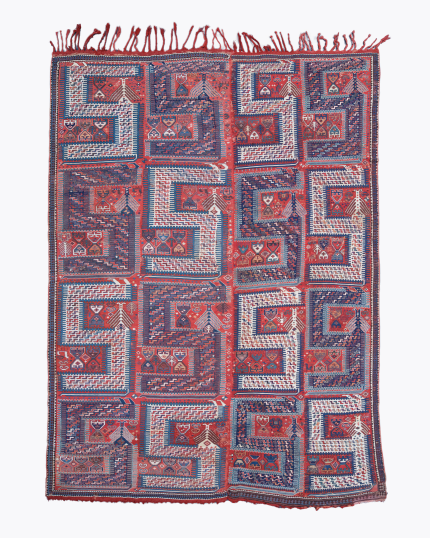

Early 18th Century Aksaray Rug
Period: Early 18th Century
Origin: Aksaray, Turkey
Dimensions: 150 x 205 cm
This rare early 18th-century Aksaray rug from Central Anatolia highlights a powerful and archaic geometric composition featuring a large, central diamond medallion quartered into vibrant segments of madder red and teal blue. This structural balance between the monumental central diamond and the surrounding rectangular “star-filled” panels reflects the transition from early Ottoman village weaving to the highly specialized regional styles of the Aksaray district. The design represents a peak in the Central Anatolian aesthetic, showcasing a bold use of hooked “running dog” outlines and ancient tribal totems that create a sense of primitive, architectural strength.
The color palette is masterfully balanced, featuring a primary deep walnut or charcoal field that serves as a dramatic canvas for the high-contrast shifts of madder red, saffron yellow, forest green, and ivory. These saturated and enduring tones, achieved through the expert application of natural dyes over three centuries ago, exhibit a chromatic depth and primary clarity that are hallmarks of the finest early Aksaray productions. The inclusion of a distinctive border featuring geometric “S-form” rosettes and a secondary “running dog” guard stripe creates a precise visual frame that highlights the superior wool quality and distinctive technical charm of the master village weavers.
Structural analysis indicates the use of robust, hand-spun local wool with a characteristically thick pile that has developed a noble, historic patina and significant textural wear over centuries. The bold clarity of the geometric outlines and the presence of significant abrash (natural tonal variation) within the red and blue sections definitively distinguish this antique fragment from later 19th-century interpretations or modern revivals. The presence of authentic aging signs, including localized areas of loss and the natural softening of the woolen foundation, serve as physical verification of its early 18th-century origin and its status as a premier cultural artifact of the Anatolian weaving heritage.
Ultimately, this Aksaray rug stands as a premier example of Early Turkish village art, representing a peak in both technical endurance and aesthetic rarity. Its technical integrity, archaic geometric composition, and historical significance make it a priceless cultural treasure for global museums and prestigious private collections specializing in early Islamic textiles. The unique presence and graphic power of this piece make it not only a serious investment but a breathtaking centerpiece, preserving the legacy of the Central Anatolian master weavers for future generations.
Related products
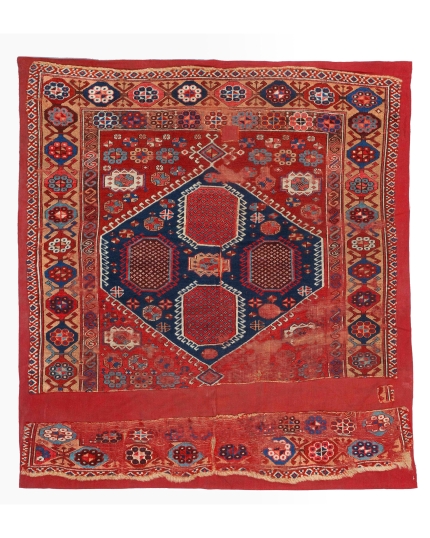
Antique Sivas Fragment
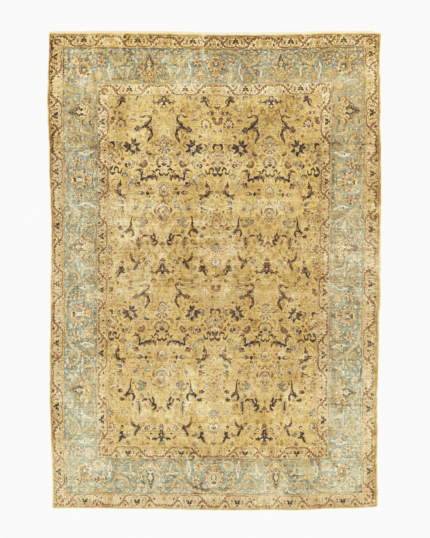
A Kum Kapi Silk and Metal Thread Rug

Early 18th Century Cappadocia Rug
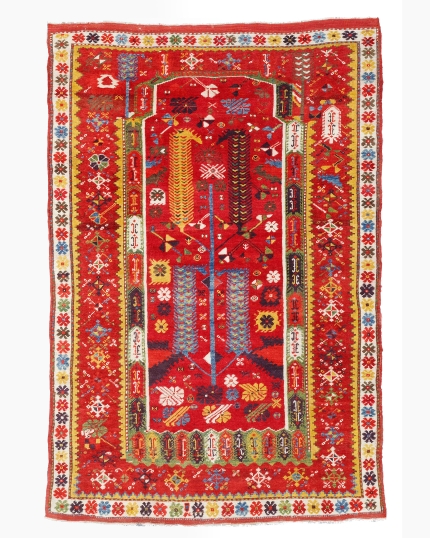
Antique Milas Rug





 Mimar Mehmetağa Cad. No:10 Sultanahmet / ISTANBUL