

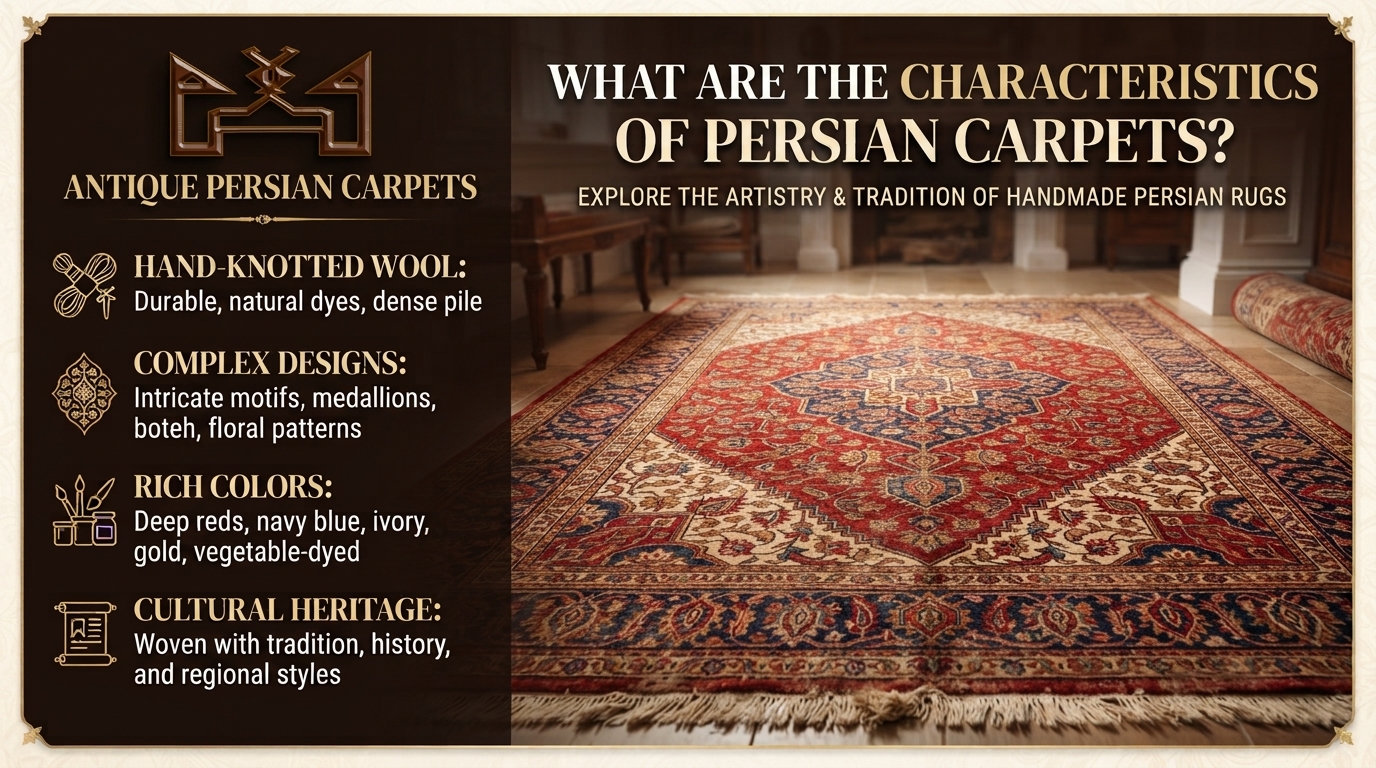
When we think of hand-woven carpets, Persian rugs are among the very first styles that come to mind worldwide. What sets Persian carpets apart from others is the use of high-quality wool and silk yarns combined with traditional Persian (Senneh) and Turkish (Ghiordes) knotting techniques. Colored with organic plant dyes, these timeless masterpieces have a rich history dating back to the 16th century and continue to be exhibited in prestigious museums and private collections across the globe.
The Role of Persian Carpets in Interior Design
Renowned for their aesthetic appeal and exceptional durability, Persian carpets seamlessly complement both classic and modern interiors, harmonizing effortlessly with curtains, furniture, and decorative accents. The use of premium wool not only extends the lifespan of the rug but also preserves a vibrant, rich color palette that ages gracefully over the decades.
How Are Persian Carpets Dyed?
Authentic hand-woven Persian rugs are completely free of synthetic materials, relying instead on high-quality natural root and plant dyes that ensure a healthy, eco-friendly structure. Traditional artisans achieve their rich hues using natural ingredients such as:
-
Indigo (for deep blues)
-
Turmeric (for warm yellows)
-
Cochineal (for vibrant reds and crimsons)
-
Pomegranate rind (for earthy yellows and browns)
-
Madder root and walnut husks (for rich terracotta and dark brown tones)
Weaving Techniques and Quality Details
Finely crafted Persian carpets are celebrated for their soft texture and velvety sheen. A high-grade Persian rug typically features between 10 to 14 knots per square centimeter (roughly 65 to 90 knots per square inch). The asymmetric Persian (Senneh) knot—especially when woven with fine wool or silk—allows for intricate detailing, superior flexibility, and a plush finish that retains its form for generations.
Regional Patterns and Motifs of Persian Rugs
Throughout history, Persian carpets have served as symbols of elegance and prestige, even gracing royal coronations—most notably the famous Safavid coronation carpet exhibited at Rosenborg Castle in Copenhagen. Each weaving region brings its own distinct character and heritage to the loom:
-
Abadeh: Known for producing some of the most durable Persian rugs, typically featuring geometric hexagonal medallions surrounded by small bird and floral motifs in shades of red, reddish-brown, and blue.
-
Kashan: Distinguished by a grand central medallion design framed by intricate, classical arabesque borders.
-
Kerman: Tightly woven from high-pile lamb’s wool, celebrated for its complex floral arrangements and rich, detailed oriental motifs.
-
Herat: Finely spun and tightly knotted, these rugs boast a lustrous finish and soft texture, often showcasing palm and pear (boteh) patterns over deep red and blue backgrounds.
-
Baluch: Recognized by their deep, rich color palettes and symbolic “Tree of Life” motifs, often reinforced with flat-woven kilim ends to prevent fraying.
With rich patterns inspired by nature, geometry, and daily life, Gallery Aydın offers an exclusive collection of authentic hand-woven Persian carpets designed to bring timeless elegance and heritage into your living spaces.



 Mimar Mehmetağa Cad. No:10 Sultanahmet / ISTANBUL