


| Size |
|---|
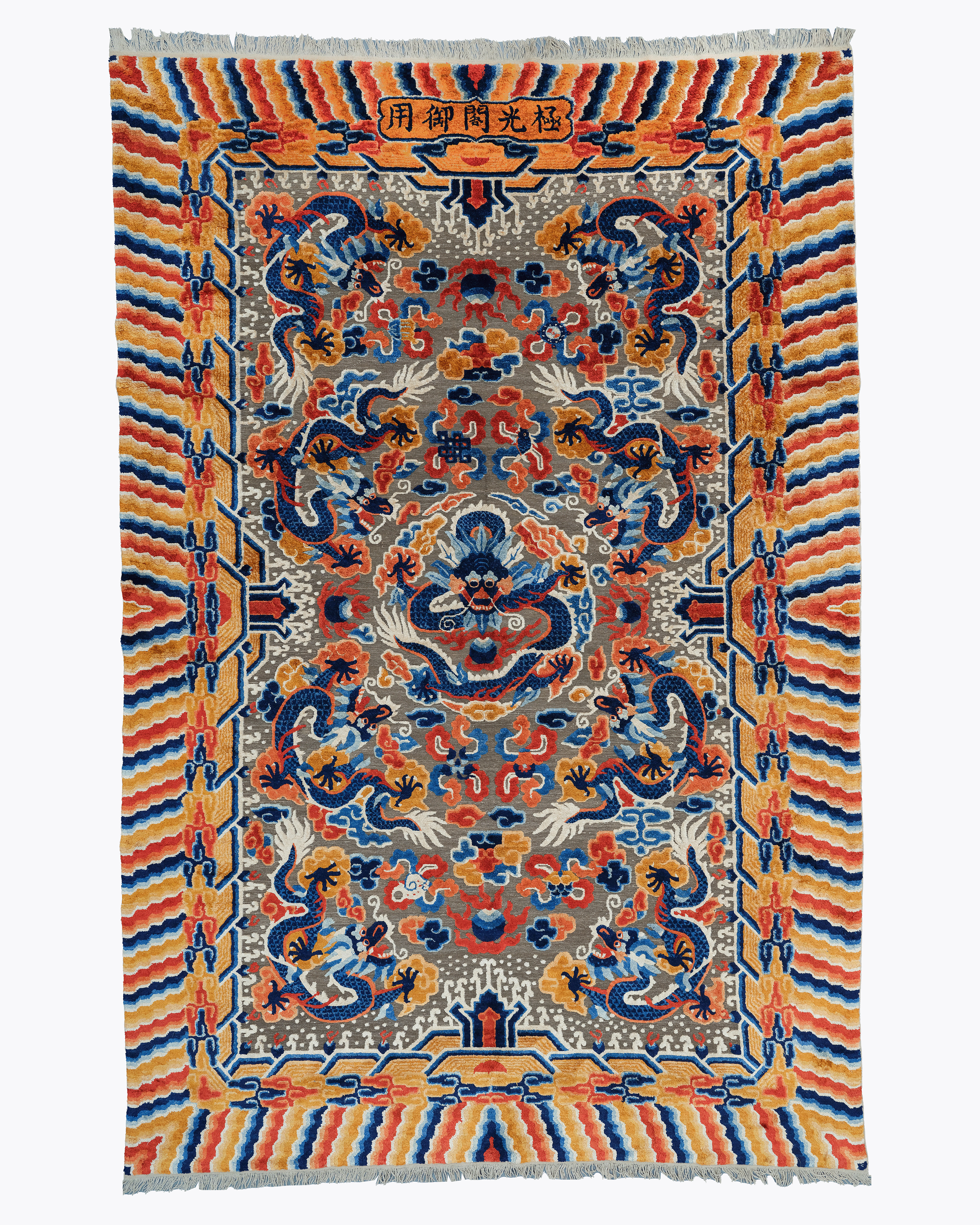
Important Signed Imperial Silk & Gold – Metal – Thread Ning Xia ‘Dragon’ Palace Rug
Period: 19th Century
Origin: China
Dimensions: 186 x 286 cm
This rare 19th century Imperial Ningxia silk and gold-metal-thread “Dragon” palace rug highlights a powerful and rhythmic mythological composition featuring five celestial dragons—including a monumental front-facing central dragon—soaring amidst stylized clouds and auspicious symbols on a luminous grey-gold field. This structural balance between the dynamic, swirling dragon figures and the vibrant “Lishui” (standing water) border reflects the pinnacle of the Ningxia workshop tradition, which served the highest levels of the Qing Dynasty court. Ningxia carpets of this significance are world-renowned for their use of precious metal threads and “Imperial Yellow” tones, with the presence of a formal inscription cartouche at the top of the field confirming its intended use within the imperial palace complex.
The color palette is masterfully balanced, featuring a primary metallic-grey ground that serves as a dramatic canvas for high-contrast shifts of copper-orange, sapphire blue, and lemon yellow. These rich and enduring tones, enhanced by the natural shimmer of silk and the reflective quality of gold-wrapped threads, exhibit a chromatic strength and a saturated depth that are hallmarks of the finest 19th-century Chinese imperial productions. The inclusion of a complex “mountain and sea” border system—anchored by rhythmic, rainbow-colored diagonal waves and a formal geometric guard band—creates a precise visual frame that highlights the superior material quality and distinctive technical finesse of the master weavers.
Structural analysis indicates the use of premium silk and metal-wrapped threads on a traditional foundation, resulting in a characteristically fine texture and a radiant, jewel-like handle. The exceptional clarity of the zoomorphic outlines—specifically the fierce facial expressions of the five-clawed dragons, their individual scales, and the formal calligraphic characters within the signature cartouche—definitively distinguish this antique masterpiece as an authentic imperial artifact. Ultimately, this Ningxia palace rug stands as a premier example of Chinese textile art, representing a peak in both technical endurance and graphic majesty for global textile collectors.
Nine Dragons are known as an imperial symbol. Especially the five-clawed dragon was exclusively reserved for the emperor, without his approval, the production of this design was strictly forbidden and severly punished until 1911 , the end of the Qing Dynasty.
The inscription reads “ji guang ge yu yong”. For Imperial Use in Jiguang Pavilion (or the pavilion of Utmost Light). The two “御用” symbols prove the imperial origin . The pictorial representations are a wonderful example of traditional Chinise mysticism and symbolism.
In the field, in addition to the 9 dragons, there are 8 other symbols, such as the lotus flower, the endless knot of fate and the carp. The excellent condition suggests that this carpet was only used on special occasions and was otherwise kept in a chest.
Additional information
Related products

Antique Serapi Carpet


Antique Ferahan Sarouk Carpet





 Mimar Mehmetağa Cad. No:10 Sultanahmet / ISTANBUL