


Early Sarkisla Rug
Period: Circa 1700
Origin: Sarkisla, Turkey
Dimensions: 92 x 122 cm
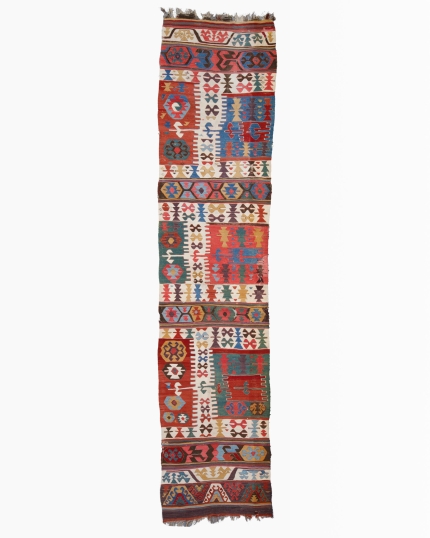
The surface data of this rare circa 1700 Şarkışla kilim from Central Anatolia provides definitive evidence of the archaic weaving traditions and bold geometric sensibilities that define early tribal art in the region. A detailed visual analysis of the composition reveals a rhythmic sequence of massive nested hexagonal medallions, each housing complex internal geometry and stylized tribal symbols. This structural balance between the large scale motifs and the intricate internal detailing reflects a superior level of technical precision and narrative depth found only in the most significant early kilim examples.
The color palette is masterfully balanced, featuring a vibrant and well preserved array of coral orange, deep violet purple, and sunny yellow set against a clean ivory ground. These saturated tones, achieved through the expert application of natural dyes more than three centuries ago, exhibit a clarity and chromatic depth that have remained remarkably luminous over time. The presence of these specific rare pigments, particularly the early violet and coral shades, serves as a hallmark of the sophisticated dye mastery practiced in the Şarkışla region during the late 17th and early 18th centuries.
Structural data indicates the use of the traditional slit weave technique, which creates the sharp, clean lines and visual vibration characteristic of early Anatolian kilims. The organic color shifts known as abrash and the slight characteristic deviations in the weave definitively distinguish this antique masterpiece from modern or mechanical reproductions. The presence of authentic aging signs and the weathered patina on the wool fibers serve as physical verification of its circa 1700 origin and its status as a significant cultural artifact.
Ultimately, this Şarkışla kilim stands as a premier example of early Central Anatolian textile art, representing a peak in both technical and aesthetic achievement. Its technical integrity, rare color combination, and historical significance make it a priceless cultural treasure for global collectors. The powerful presence and archaic energy of this piece make it not only a serious investment but a breathtaking centerpiece that preserves the legacy of the Anatolian tribal weaving traditions for future generations.
Related products


Early 18th Century Cappadocia Rug

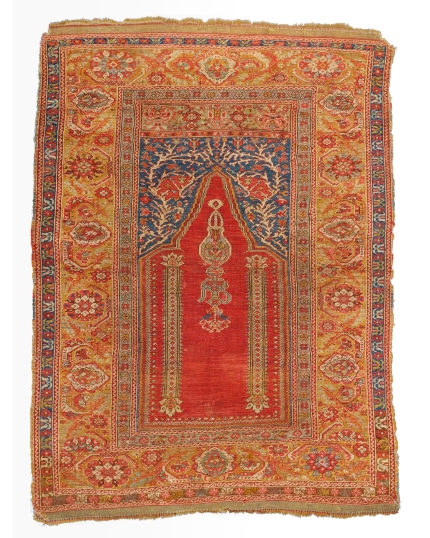
Antique Ghordes Prayer Rug





 Mimar Mehmetağa Cad. No:10 Sultanahmet / ISTANBUL