
Antique Erzurum Prayer Kilim
Period: Early 19th Century
Origin: Erzurum, East Anatolia
Dimensions: 146 x 172 cm
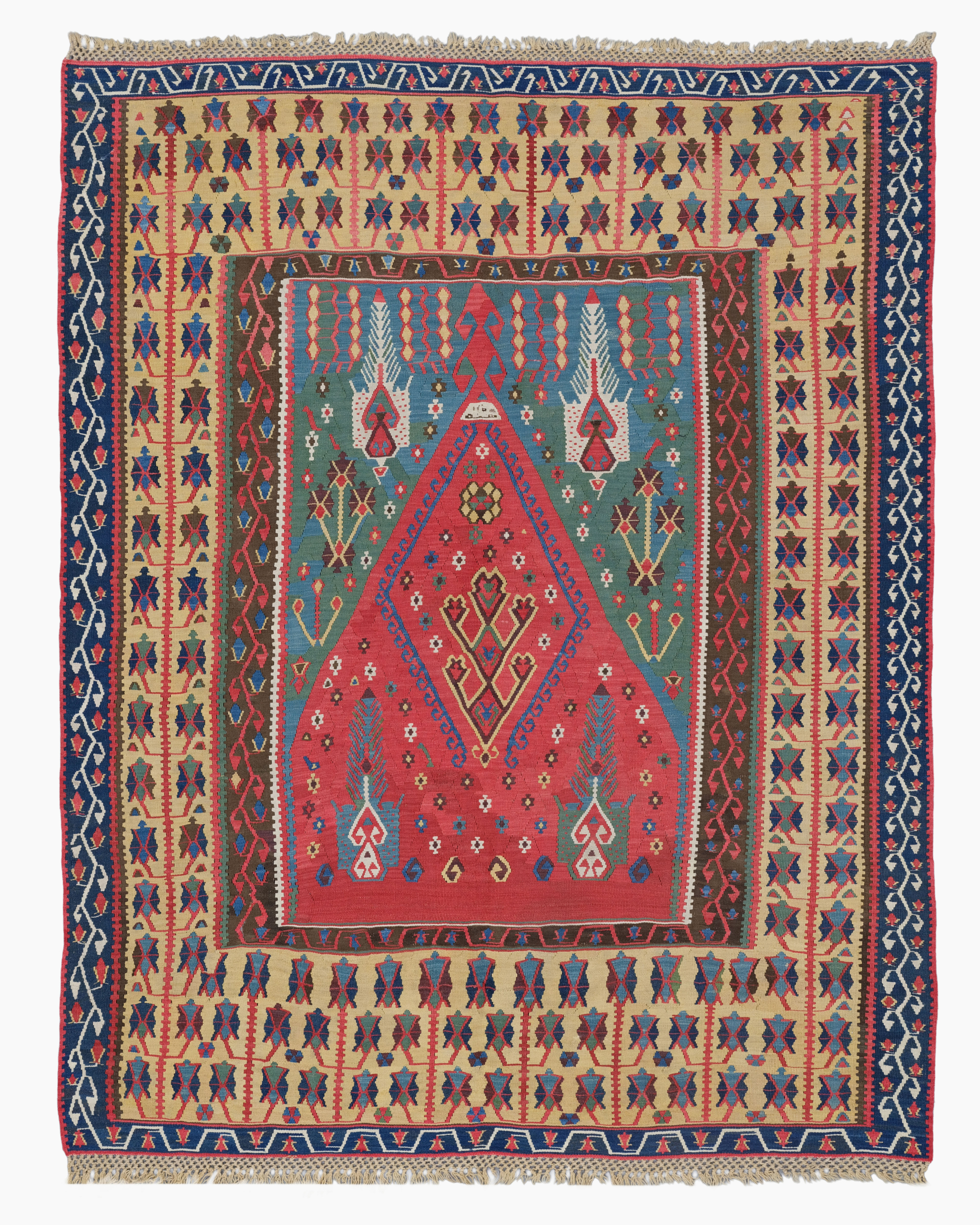
This early 19th century Erzurum kilim is a remarkable and highly characteristic example of Eastern Anatolian flat weave tradition. With its bold color language, powerful symbolism, and well balanced composition, it reflects the deeply rooted tribal aesthetics of the region with striking clarity.
The composition is built around a mihrab like central form rising from a two colored ground. At the heart of the design stands a large stylized Tree of Life motif, an ancient symbol of fertility, continuity, and protection. This principal element is enriched with surrounding ram horn, elibelinde, and amulet like devices, giving the kilim a layered structure both rhythmically and symbolically.
The border arrangement is one of the most distinctive features of the piece. The wide main border on a light ground displays repeating star and hooked geometric motifs, forming a strong architectural frame. Narrow inner and outer guard stripes with zigzag and angular patterns balance the horizontal emphasis of the composition. The drawing is direct and instinctive, clearly expressing the sincere yet powerful visual language of village weaving.
The color palette is typical of the Erzurum area, featuring vibrant reds, turquoise blues, natural greens, and warm golden yellows. The use of natural dyes has allowed the tones to soften gracefully over time, creating a deep and warm patina on the surface.
Overall, this kilim is an outstanding example of early 19th century Erzurum weaving, distinguished by its authentic character, rich symbolic content, and strong decorative presence.
Description
Additional information
| Size |
146 x 172 cm |
|---|
Related products
Antique Sivas Fragment


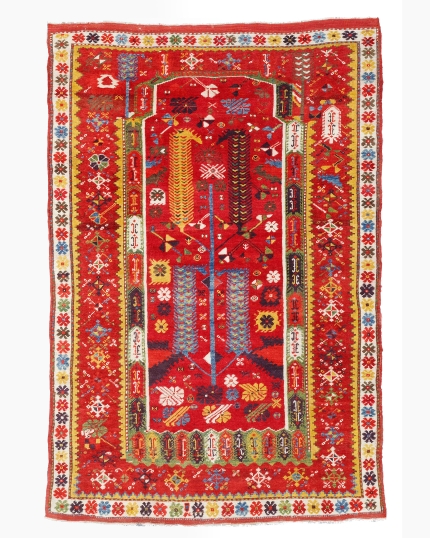
Antique Milas Rug

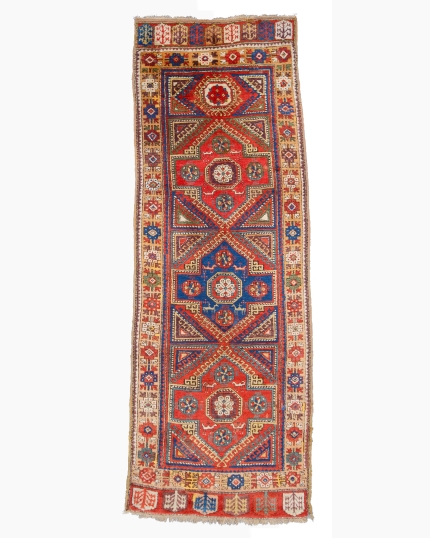
Antique Konya Rug
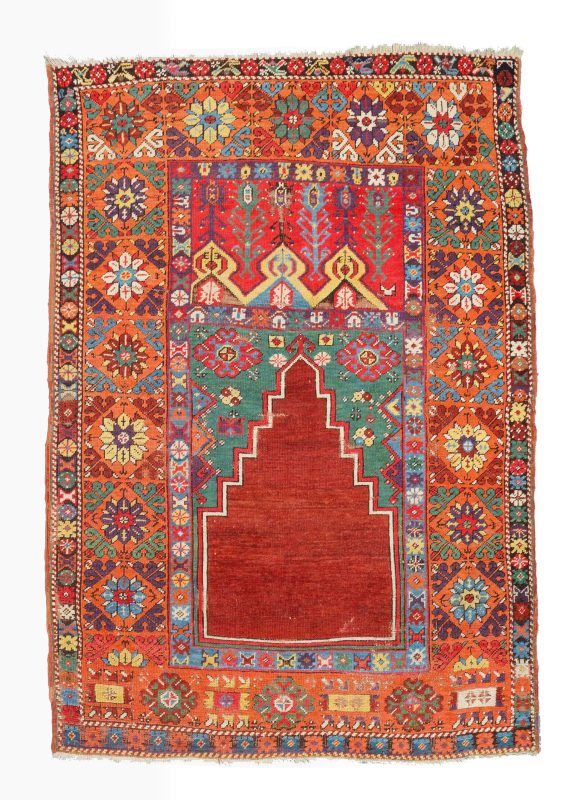
Antique Konya Rug
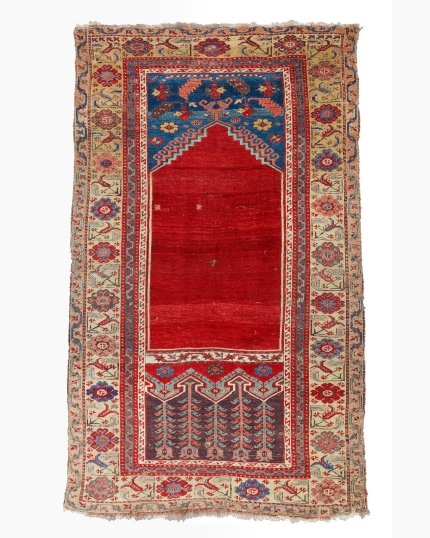



 Mimar Mehmetağa Cad. No:10 Sultanahmet / ISTANBUL