
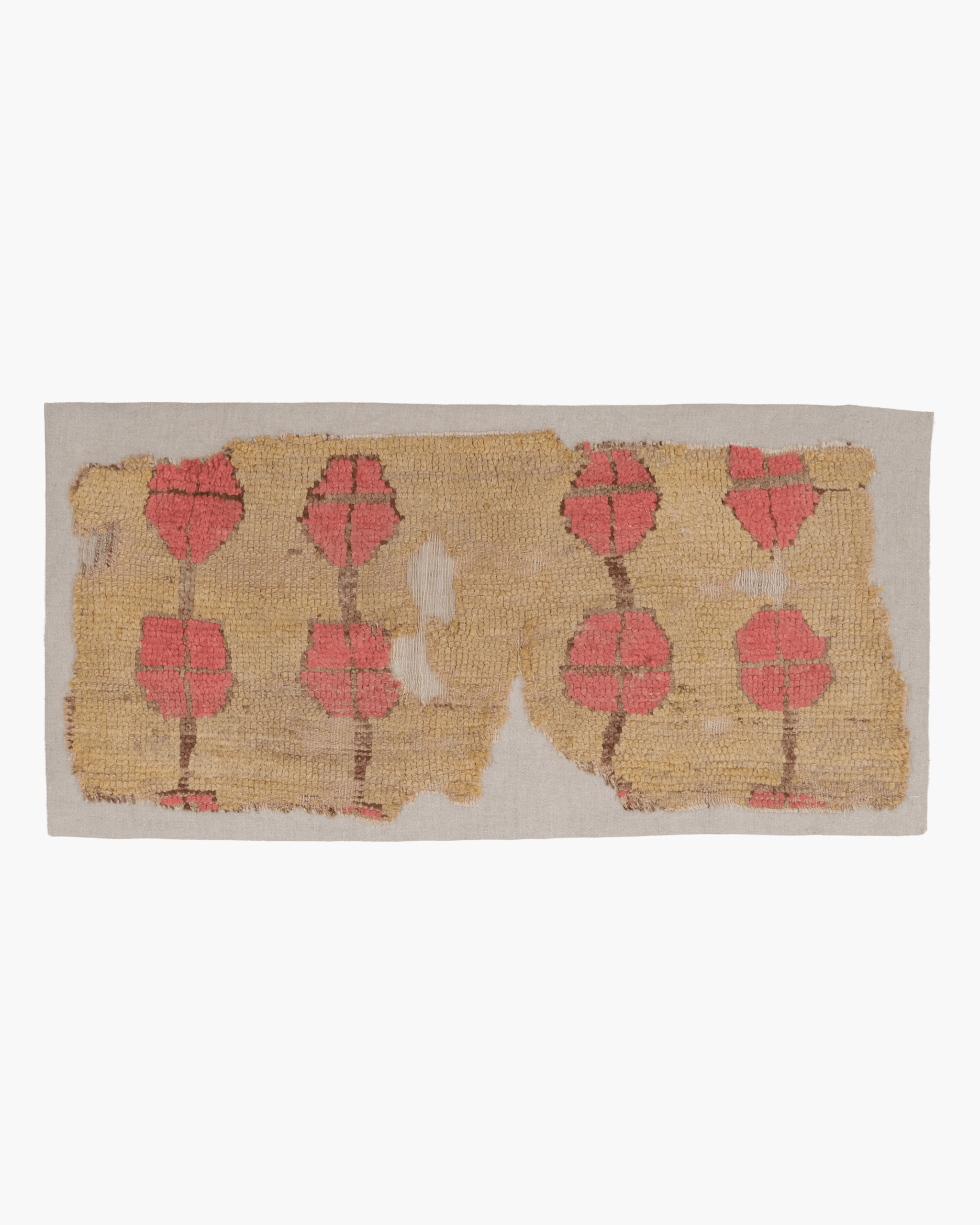


17th Century Cappadocia Rug Fragment
Period: 17th Century
Origin: Cappadocia
Dimensions: 48 x 102 cm
This 17th century Cappadocia rug fragment is a rare and significant artifact of early Anatolian weaving from the Central Anatolian region of Turkey. Fragments of this age are highly valued by textile historians and museums for the insight they provide into the archaic design languages and technical characteristics of pre 19th century tribal rugs. The fragment displays a bold, geometric floral pattern, specifically stylized red tulips or carnations arranged in a vertical tree formation against a pale gold or ivory field.
The use of large scale, isolated blossoms is characteristic of early Anatolian rugs before designs became more densely packed in later periods. This piece exhibits a classic early Anatolian palette achieved through natural dyes, with primary colors featuring a weathered madder red and a rich yellow field likely derived from weld or vine leaves. Over centuries, these colors have developed a distinctive, soft patina that reflects their historical journey. The weave appears to be relatively coarse but sturdy, with a high woolen pile originally intended for warmth.
The irregular shape of the fragment reveals the hand spun nature of the wool and the vertical loom tension common to village weaving in Cappadocia. Unlike the highly refined court carpets of Istanbul or Bursa from the same era, this piece reflects a more rustic, provincial interpretation of the prevailing Ottoman aesthetic. Because of its age, the fragment shows significant wear, loss of pile, and tattered edges, necessitating its conservation mounting on archival quality linen. This mounting serves as both a protective measure and a professional method of display in a collector’s or museum context.
Stock No : 5033
Related products

Antique Konya Rug
Antique Ghordes Prayer Rug

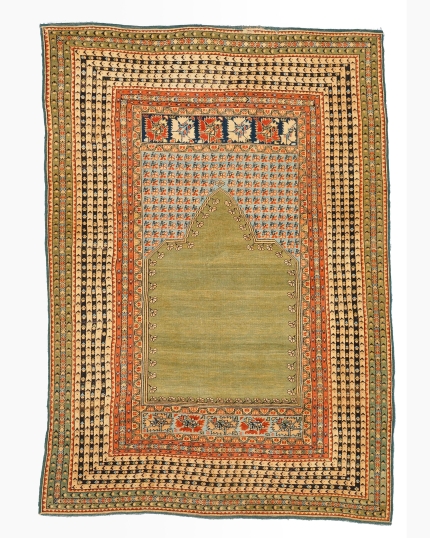
Antique Ghordes Prayer Rug

Early 18th Century Cappadocia Rug



 Mimar Mehmetağa Cad. No:10 Sultanahmet / ISTANBUL